


.png)
Home EV Charger Installation in Rockingham Made Easy

For Rockingham homeowners, owning an electric vehicle can make everyday driving simpler, but convenient charging starts with the right home setup. Home EV Charger Installation gives EV owners a dedicated place to recharge overnight or during the day, without relying entirely on public charging stations. A properly planned charger can also work alongside rooftop solar and battery storage. That makes EV charging part of a broader home energy strategy rather than a standalone electrical upgrade.
The Western Australian Government recommends having a licensed electrician assess the home's wiring, electrical capacity, charger location and charging requirements before installation. Dedicated wall chargers can also provide significantly faster charging than a standard household socket. For families, new homeowners, apartment residents and people living in regional parts of Western Australia, the right solution depends on how the vehicle is used, how much electricity the property consumes and whether solar or battery storage is already installed.

Why Home EV Charger Installation Makes Sense in Rockingham
A standard household power outlet can charge an EV, but charging is relatively slow. A dedicated charger is designed for regular vehicle charging and can provide a more convenient routine. The WA Government lists approximate charging rates ranging from around 10–15 km of driving range per hour from a 2.2 kW standard socket to approximately 30–40 km per hour from a 7 kW dedicated charger. Actual performance varies according to the vehicle, battery, temperature and onboard charger.
Charging option | Approx. power | Approx. range added/hour* | Typical use |
Standard socket | 2.2 kW | 10–15 km | Occasional charging |
15A connection | 3.7 kW | 15–20 km | Moderate home charging |
Dedicated charger | 7 kW | 30–40 km | Everyday home charging |
Three-phase charger | 11 kW | 50–60 km | Higher daily driving |
Three-phase charger | 22 kW | 100–120 km | High-speed home charging |
*Approximate figures published by the Western Australian Government; vehicle specifications affect actual results. For many Rockingham households, a 7 kW charger can be a practical balance between charging performance and household electrical requirements. A higher-powered system is not automatically better. Your vehicle and property's electrical supply should determine the appropriate option.
How Solar Can Power Your EV at Home
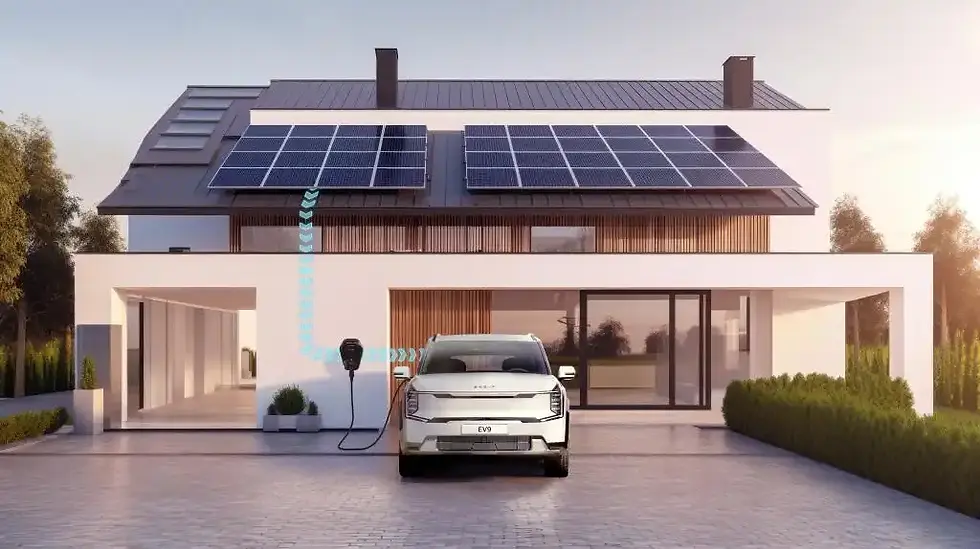
One of the strongest reasons to combine Home EV Charger Installation with solar is the opportunity to use more of your home's renewable electricity. Rooftop solar produces electricity during daylight hours. An EV parked at home during those hours can potentially use some of that generation directly. This can be particularly useful for homeowners who work from home, have flexible schedules or regularly leave their vehicle at home during the day. The Clean Energy Council notes that rooftop solar is already widely adopted across Australian households and that electrification is increasingly connecting solar, batteries, EVs and other electric technologies.
Solar EV Charging Example
Imagine a Rockingham home with:
Rooftop solar
A dedicated EV charger
An EV parked at home during part of the day
A smart charging system
Optional battery storage
Instead of automatically charging the car at any time, a smart charger can potentially coordinate charging with solar generation or electricity pricing. That can help the household use more of its own generated electricity and reduce reliance on grid electricity.
Solar + EV Charging Planning Table
Home energy setup | EV charging approach | Potential advantage |
No solar | Scheduled grid charging | Simple overnight charging |
Existing solar | Daytime solar charging | Uses available solar generation |
Solar + battery | Solar and stored energy | Greater energy flexibility |
New solar installation | Solar + EV-ready charger | Designed as one energy system |
Solar + battery + smart charger | Managed charging | Better control of household energy |
The exact financial result depends on your electricity plan, solar generation, vehicle efficiency, battery capacity and charging schedule.

Approximate EV Range Added Per Hour
The following chart uses the WA Government's published approximate charging figures.
Charging Power       Approx. Range Added/Hour

2.2 kW   ███████                 10–15 km
3.7 kW   ██████████              15–20 km
7 kW     ████████████████████    30–40 km
11 kW    ███████████████████████ 50–60 km
22 kW    █████████████████████████████████████ 100–120 km
The chart shows why a dedicated charger can be useful for households that drive regularly. A 7 kW system, for example, can add substantially more range per hour than a standard 10-amp outlet.
What Happens During Home EV Charger Installation?
A professional installation should start with an assessment rather than simply mounting a charger on the wall.
A licensed electrician can review:
Existing switchboard capacity
Single-phase or three-phase supply
Cable distance between the switchboard and charger
Proposed charger location
Required protection equipment
Household electricity demand
Solar and battery configuration
Future EV or energy requirements
The WA Government specifically advises homeowners to consult an electrician to confirm that household wiring can handle the additional load. A dedicated charger may also require electrical work beyond the charger itself. Electrical installation work in Western Australia is subject to applicable requirements, including the WA Electrical Requirements and AS/NZS 3000 Wiring Rules. Electrical contractors also have notification and certification obligations for applicable installation work.
Installation Planning Table
Factor | Why it matters | What the installer checks |
Switchboard | Determines available electrical capacity | Existing breakers and capacity |
Charger location | Affects installation complexity | Parking position and cable route |
Power supply | Influences charger capability | Single or three phase |
Solar system | Can support daytime charging | Solar capacity and generation pattern |
Battery | Can provide stored energy | Battery size and operating strategy |
Cable distance | Longer runs can increase complexity | Route from switchboard to charger |
Future needs | Helps avoid another upgrade | Additional EV or energy equipment |
This assessment is particularly important for older homes, properties with multiple high-load appliances and homes planning a solar or battery upgrade.
Choosing the Right EV Charger for Your Rockingham Home
The best charger is not necessarily the one with the highest charging rating.
Start with your vehicle. Check the maximum AC charging rate supported by the car. Installing a charger capable of more power than the vehicle can accept may not provide a meaningful improvement. Next, consider your daily driving. A household travelling relatively short distances each day may have no need for an extremely high-powered charger. Overnight charging from a suitable dedicated unit can be sufficient for many drivers.
For households with longer commutes, multiple EVs or frequent driving, a higher-capacity solution may make more sense. Smart features are another consideration. The WA Government recommends considering features such as scheduling, remote control, energy monitoring and compatibility with solar systems.
Smart Charging Can Add More Value
A smart charger may allow homeowners to control charging around:
Solar generation
Electricity tariffs
Vehicle departure times
Household electricity demand
Battery operation
Charging priorities
That makes the charger part of a broader home energy management strategy.

Home EV Charger Installation for Apartments and New Homes
Not every Rockingham resident lives in a detached house. Apartment owners and residents in strata buildings may have additional requirements. The WA Government provides specific guidance for EV charging in strata and multi-residential buildings. Owners corporations, building infrastructure and electrical supply arrangements can all affect how a charger is connected.
For an apartment owner, the first step should be checking:
Parking-space ownership or allocation
Strata approval requirements
Available electrical capacity
Cable routes
Metering arrangements
Shared infrastructure
Future charging requirements
New home buyers have another advantage: EV charging can be considered during the design stage. Planning an EV-ready electrical layout during construction can make future installation easier than retrofitting a charger after walls, driveways and electrical infrastructure are complete.
How Solar, Batteries and EV Charging Work Together
An EV can become one of the largest electrical loads in an all-electric household. That makes energy planning increasingly important. For homeowners considering Solar Panel for Western Australian homes, adding EV charging to the planning conversation can produce a more useful system design. Instead of asking only, "How many solar panels do I need?", consider the complete household energy profile.
For example:
Solar panels → household appliances → EV charger → battery storage → grid
A suitable battery can store surplus solar energy for later use. The Clean Energy Council highlights battery storage as a way to increase household use of solar energy and improve energy flexibility.
Insight: The Charger Should Be Planned With the Energy System
The biggest planning mistake is treating an EV charger as an isolated appliance.
A better approach is to consider the charger alongside your:
Solar system
Battery
Switchboard
Electricity tariff
Vehicle
Daily driving pattern
Future energy requirements
For a homeowner already considering solar panel installation, it can be worthwhile discussing EV charging at the same time. A qualified Solar Service provider may be able to coordinate solar, battery and EV charging requirements, while the electrical installation itself must comply with applicable requirements.
What Can Affect EV Charger Installation Cost?

How to Choose an EV Charger Installer in Rockingham
Choosing an installer should involve more than comparing the cheapest quote.
Ask the installer:
Is the electrician appropriately licensed?
Will the existing switchboard be assessed?
What charger power is suitable for my EV?
Can the charger work with my solar system?
Can it integrate with battery storage?
What protection equipment is required?
Will the charger be future-ready?
What documentation will I receive after installation?
What warranty applies to the charger and installation?
The WA Government states that a licensed electrician is required for a new dedicated home charger or new power point. For charger hardware, look for products suitable for Australian use and appropriate regulatory compliance. WA Government guidance notes that electrical equipment should meet applicable Australian safety requirements and carry the required Regulatory Compliance Mark where applicable.
Make Your Rockingham Home EV-Ready
A well-designed Home EV Charger Installation can do more than provide a faster way to recharge your car. For Rockingham families and homeowners, it can become part of a complete household energy plan involving solar panels, battery storage and smart energy management. If you are already considering solar, adding an EV charger to the discussion can help create a more coordinated system. If you already have solar, a smart charger may help you make better use of available generation.
For homeowners planning a new property, an EV-ready electrical design can also reduce the difficulty of adding charging infrastructure later. The best starting point is a professional assessment of your vehicle, property, electrical supply and future energy goals. For Rockingham homeowners looking for solar panel installers, EV charging and battery solutions, choosing a provider that understands the complete energy system can make the project simpler and more practical.
FAQs
1. Do I need a licensed electrician to install an EV charger at home?
Yes. The Western Australian Government advises homeowners to engage a licensed electrician for a dedicated home EV charger or new power point. The electrician should assess the home's wiring, electrical capacity, charger location and protection requirements. Applicable electrical installation work must comply with WA requirements and relevant wiring standards.
2. Is a 7 kW EV charger enough for home charging?
For many households, 7 kW can provide a practical home charging solution. WA Government guidance estimates approximately 30–40 km of vehicle range per hour at 7 kW. The suitable size depends on your EV, daily kilometres, electrical supply and charging schedule. A higher-powered charger is not automatically necessary for every Rockingham household.
3. Can I charge my EV using rooftop solar?
Yes. An EV can use electricity generated by rooftop solar, subject to the home's system configuration and charging equipment. Smart chargers can provide scheduling and energy-management features that help coordinate charging with solar generation. A solar installer or electrician can assess whether your existing system is suitable for your charging requirements.
4. Can an EV charger work with a home battery?
Yes, depending on the equipment and system design. A home battery can store electricity generated by solar for later household use, including EV charging. The charger, inverter, battery and electrical system need to be assessed together so the household can manage available energy safely and efficiently.
5. Can apartment owners install an EV charger in Rockingham?
Apartment residents can install EV charging infrastructure, but strata and building requirements may apply. The WA Government provides specific guidance for EV charging in strata buildings, including considerations around electrical supply, shared infrastructure and owners corporation arrangements. Residents should obtain the necessary approval and have the proposed installation professionally assessed.


