.png)
Home EV Charger Installation with Existing Solar

Adding an EV charger to a home that already has solar sounds like the simple version of the job. The panels are up, the inverter is running, surely it's just a matter of plugging in a charger. In practice, retrofitting a charger onto an existing system involves a few checks that a brand-new install from scratch doesn't need to worry about, whether the existing inverter and switchboard have room for the extra load, and whether the charger itself is capable of actually using your solar output instead of just drawing from the grid like any other appliance.
Home EV Charger Installation done properly on top of existing solar isn't just about getting power to the car. It's about making sure the two systems actually work together, which is where a lot of straightforward-looking retrofits go wrong.

Home EV Charger Installation: Checking Whether Your Existing Solar System Can Support It
Before any charger goes on the wall, a few things about the existing system need confirming.
What to Check | Why It Matters | What Happens If Skipped |
Existing inverter capacity against WA's 30kVA aggregate allowance | Combined solar and EV charging capacity may need to fit within the network's aggregate inverter capacity rules | Could trigger a network notification or approval requirement if the combined capacity exceeds current limits |
Switchboard condition and spare circuit capacity | Older switchboards may not have room for a new dedicated EV circuit without an upgrade | Unsafe installation or a failed Electrical Safety Certificate |
Inverter and charger compatibility for solar diversion | Charging directly from solar requires a charger with current transformer clamps monitoring real-time export | Without this, the charger draws from the grid like a standard appliance and misses the free solar entirely |
Export management requirements | Systems installed or upgraded from 1 May 2026 need Emergency Solar Management support or a fixed lower export limit | A tighter export cap than expected if the system doesn't support ESM |

Standard Charger vs Solar-Aware Smart Charger: What's Actually Different
Not every EV charger is built to interact with a solar system, and the difference matters more than the hardware price tag suggests.
Charger Type | How It Works | Typical Cost |
Standard Level 2 charger | Charges at a fixed rate whenever it's plugged in, drawing from the grid like any large appliance | $600 to $2,000 hardware, plus installation |
Solar-aware smart charger | Uses current transformer clamps to monitor real-time solar export, then throttles charging speed to match available surplus | $1,100 to $2,000+ hardware, plus installation |
Smart charger with scheduling | Adds app-based scheduling for off-peak or solar-only charging windows on top of diversion functionality | Similar pricing to the above, with the feature usually bundled into current models |
A standard charger isn't a bad option, but on a home with existing solar, it leaves the actual benefit of that solar system on the table unless charging happens to align with generation by chance rather than by design.
How Much You Can Actually Save Charging From Excess Solar
The gap between charging strategies isn't small once solar diversion is genuinely part of the equation.
Approximate Cost per 100km by Charging Method, WA
Petrol (regular unleaded)        |███████████████████████████  $12–15
Public fast charger              |█████████████████             $7–10
Home charger, standard rate      |████████                       $4–5
Home charger, off-peak rate      |███                             $1.50–2
Home charger, solar diversion    |█                                Near-zero on sunny days
Figures are approximate and based on current Synergy tariff rates, typical EV energy consumption, and solar-aware charger performance under good generation conditions.
Why WA's Export Limits Make This Combination Especially Valuable
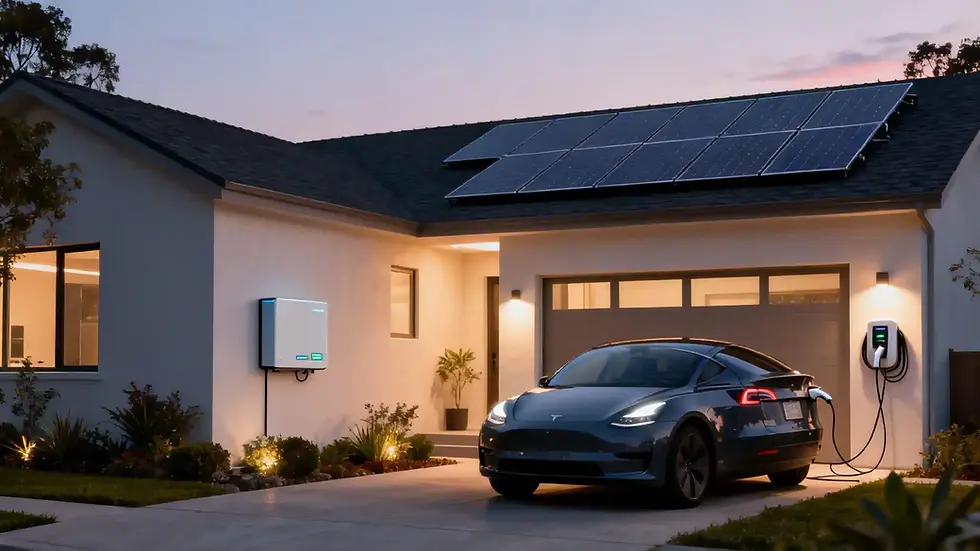
Insight: Western Power's residential export limits mean a home with a decently sized solar system is often generating more at midday than it's allowed to send to the grid, and that surplus gets curtailed rather than paid for. A solar-aware EV charger absorbs exactly that surplus before it hits the export cap, turning power that would otherwise be wasted into free vehicle charging. That's a meaningfully different value proposition than simply charging overnight on a cheaper tariff, it's capturing generation your own system is already producing but currently has nowhere useful to go.
Choosing a Solar Service Provider for Home EV Charger Installation
Just Solar Co, a Western Australian solar service provider, installs EV chargers alongside solar panel installation and battery storage using in-house SAA-accredited electricians, which matters directly for a retrofit project since assessing an existing system's capacity and compatibility is most of the actual work.
Families and Homeowners
A switchboard and inverter assessment before choosing a charger avoids the common mistake of buying a solar-aware charger that the existing system can't actually support without further upgrades.
New Home Buyers
Buyers inheriting an existing solar system with an EV on the way should get the system's capacity checked early, ideally before settlement, since it shapes whether a straightforward retrofit or a larger upgrade is the right path.
Rural and Regional Residents
Properties with three-phase supply already in place for other equipment often have more room for a combined solar and EV charging setup, but the same capacity and compatibility checks still apply regardless of location. Whatever the starting point, Just Solar Co services Perth metro, the South West, and the Kimberley region, with electricians who can confirm whether an existing system supports a straightforward retrofit or needs additional work first.

FAQs
Can I add an EV charger to my existing solar system in WA?
Yes, in most cases, though it's worth checking the existing inverter capacity, switchboard condition, and current export management setup first. A licensed electrician can confirm whether a straightforward retrofit is possible or whether an upgrade is needed beforehand.
Do I need a special charger to charge my EV from solar?
Yes, a standard EV charger draws from the grid like any other appliance regardless of solar output. A solar-aware smart charger uses current transformer clamps to monitor real-time export and throttle charging to match available surplus.
Will adding an EV charger affect my solar export limit?
It can, particularly if the combined capacity of your solar and EV charging setup falls under WA's current aggregate inverter capacity rules. Systems installed or upgraded from 1 May 2026 also need to support Emergency Solar Management or accept a lower fixed export limit.
How much does a solar-compatible EV charger cost in Australia?
Solar-aware smart chargers typically cost $1,100 to $2,000 or more for the hardware alone, compared to $600 to $2,000 for a standard charger without solar diversion capability. Installation costs are generally similar between the two types.
Can I charge my EV from solar without a battery?
Yes, a solar-aware charger can divert excess daytime solar generation directly to an EV without needing a battery in between. A battery adds the ability to store surplus for evening charging as well, but isn't required for basic solar diversion charging.
Getting Started
Home EV Charger Installation on top of an existing solar system works best when the retrofit accounts for what's already there, inverter capacity, switchboard condition, and whether the charger itself can actually use the solar you're generating. Getting that assessment right upfront is what turns a simple-looking add-on into a setup that actually pays for itself.
Just Solar Co Servicing Perth Metro, the South West, and the Kimberley region, WA Phone: 08 6337 4019 Website: justsolarco.com.au
Get in touch for an assessment of your existing solar system and what an EV charger retrofit would look like for your home.