


.png)
Home EV Charger Installation Benefits in South Perth

For South Perth homeowners, an electric vehicle is more than a different type of car. It can become part of a smarter home energy system, particularly when paired with rooftop solar, battery storage and a professionally installed home charger.
Home EV Charger Installation gives EV owners a dedicated charging point at home, making charging more convenient, predictable and easier to manage around household electricity use. The Western Australian Government recommends consulting a licensed electrician before installing a dedicated charger because household wiring, available electrical capacity, charger location and the home's power supply all need to be considered. For households already considering solar panels or a battery, an EV charger can also become another important part of the home's energy strategy.
Why Home EV Charger Installation Makes Sense in South Perth
South Perth combines established homes, newer properties, apartments and busy family households. For many residents, the ability to charge at home can remove the need to make regular trips specifically for public charging.
A dedicated charger can provide several practical benefits:
More convenient overnight charging
Faster charging than a standard power outlet
Better control over charging schedules
Potential integration with rooftop solar
Better management of household electricity demand
A more future-ready home energy setup
Greater convenience for families using an EV every day
For most South Perth households, the right charger is not necessarily the most powerful model. The better choice depends on the vehicle, daily driving distance, electrical supply, parking location, solar system and household energy requirements.
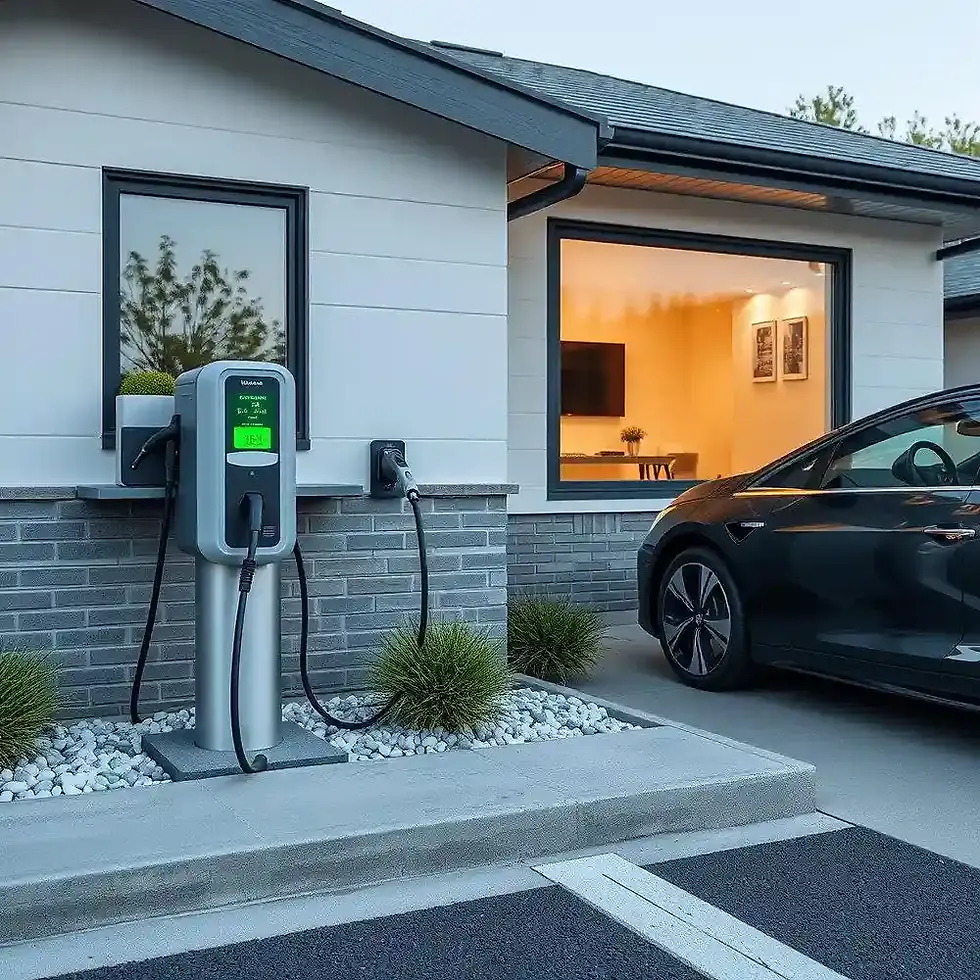
1. Charge Your EV Conveniently at Home
The biggest benefit is simple: your vehicle can be charged at home. Instead of planning a separate trip to a public charging station, homeowners can plug the vehicle in after returning home. Overnight charging can be particularly practical because the car is normally parked for several hours.
A dedicated charger can also provide a more suitable charging setup than relying on a standard household power point. The WA Government notes that a standard power point can charge an EV but is slower, while a dedicated wall charger can provide faster charging and greater convenience. For families with school runs, commuting, shopping and weekend travel, this can make EV ownership considerably easier.
Home Charging vs Standard Power Point
Feature | Standard Power Point | Dedicated Home EV Charger |
Installation | Usually existing outlet | Professional electrical installation |
Charging speed | Slower | Generally faster |
Daily convenience | Moderate | High |
Charging scheduling | Limited | Often available |
Solar integration | Limited depending on setup | Available with compatible systems |
Load management | Limited | Available on compatible chargers |
Long-term EV use | Basic option | Better suited to regular charging |
The right installation depends on the home's electrical infrastructure and the charger's specifications. A licensed electrician should assess the property before installation.
2. Use More of Your Solar Energy
For homeowners with rooftop solar, an EV can become another way to use electricity generated by the home. Instead of exporting surplus solar energy to the grid, a compatible smart EV charger can potentially direct some available solar generation toward the vehicle.
This creates an attractive combination:
Solar panels → Home energy → EV charger → Electric vehicle
A suitable system can be designed around household energy production, EV charging requirements and other electrical loads. For homeowners considering a Solar Panel for Western Australian homes, EV charging is worth including in the energy planning conversation from the beginning. A solar installation that supplies household appliances during the day may also provide energy for EV charging, depending on solar production, vehicle availability and charger configuration.
Solar + EV Charging Example
Home Energy Component | Primary Function | EV Connection |
Solar panels | Generate electricity | Can supply daytime EV charging |
Inverter | Converts solar electricity | Manages solar system output |
Battery | Stores excess energy | May support charging depending on system |
Smart EV charger | Charges vehicle | Controls charging according to settings |
Energy management system | Coordinates loads | Can optimise available energy |
This is particularly useful for households that have predictable daytime solar production and an EV parked at home for part of the day.
3. Improve Control Over Household Energy
Modern EV chargers can offer more than simple plug-in charging. Depending on the model, features may include charging schedules, power management, monitoring and integration with solar or battery systems. The WA Government specifically recommends asking installers about power management, time scheduling and compatibility with solar panels or battery storage.
For a South Perth household, this could mean setting charging around the family's routine rather than simply charging at maximum power every time.
For example, a homeowner might:
Return home in the evening.
Plug the vehicle into the charger.
Set a preferred charging schedule.
Allow the vehicle to charge during the selected period.
Coordinate charging with solar or battery settings where supported.
This approach can make EV charging easier to manage alongside air conditioning, hot water systems, cooking appliances and other major household loads.

4. Make Solar, Battery and EV Systems Work Together
The strongest opportunity for many homeowners is the combination of three technologies:
Solar + Battery + EV Charger
Solar panels generate electricity. A battery stores available energy for later use. An EV charger supplies electricity to the vehicle. This creates a more connected household energy system. However, the components need to be designed properly. A larger solar system, battery and EV charger can create additional electrical demands, so homeowners should not simply add equipment without checking the property's electrical capacity.
Western Australia's rules for new and upgraded solar and battery systems changed on 1 May 2026. The updated requirements provide more flexibility for systems within the relevant connection limits, while also introducing requirements around inverter standards and remote disconnection/reconnection or export limitation. That makes professional system design especially important for households combining multiple energy technologies.
5. A Home EV Charger Can Support Future Energy Upgrades
Installing a charger does not have to be viewed as a standalone purchase.
For a new home buyer, it can form part of a broader energy plan that includes:
Rooftop solar
Battery storage
Smart energy monitoring
Efficient appliances
Home energy management
Future EV expansion
For an existing homeowner, the charger can be installed alongside a planned solar upgrade or battery installation. This is where choosing an experienced Solar Service provider can be valuable. A provider that understands solar, batteries and EV charging can assess how these technologies interact rather than treating each installation as an isolated project.
Insight: The Charger Is Only One Part of the System
The biggest long-term benefit of Home EV Charger Installation is not simply faster charging. It is the ability to connect transport with the home's broader energy strategy.
A homeowner installing solar today may add a battery later. An EV owner may purchase a second electric vehicle in the future. Designing electrical infrastructure with future requirements in mind can reduce the risk of having to redesign the system later.
6. Benefits for Apartments and Multi-Unit Homes
Apartment owners face different challenges from detached-home owners.
Parking may be located in a shared basement or common area, and the electrical supply may be managed through shared infrastructure. Approval from the owners' corporation or strata management may also be required depending on the property and proposed installation.
For apartment owners, the first step should be understanding:
Where the vehicle is parked
Which electrical supply serves the parking area
Whether the charger can connect to the apartment's electricity supply
Whether common property is affected
What approvals are required
Whether load management is necessary
A charger installation should be planned with the building's electrical infrastructure rather than treated like adding an ordinary power outlet. New buyers can also ask whether a property is already EV-ready before purchasing. EV charging capability may become increasingly useful as electric vehicle ownership grows.
7. Choosing the Right Installer in South Perth
A good Home EV Charger Installation starts with the property assessment rather than the charger model. Ask an installer to assess:
Electrical Capacity
The electrician should determine whether the home's existing electrical system can support the charger and identify any upgrades that may be required.
Charger Location
The distance between the switchboard, charger and parking area can influence installation complexity and cost.
Single-Phase or Three-Phase Supply
Your home's electrical supply affects the charging options available. The WA Government recommends confirming whether single-phase or three-phase power is available before selecting a charger.
Solar Compatibility
If solar is already installed, ask whether the charger can use available solar generation and how the system will manage household loads.
Battery Compatibility
For homes with battery storage, confirm how EV charging interacts with the battery's operating strategy.
Safety and Warranty
Ask about charger safety features, installation warranty and manufacturer warranty. These are among the questions specifically recommended by the WA Government for homeowners considering a dedicated charger.
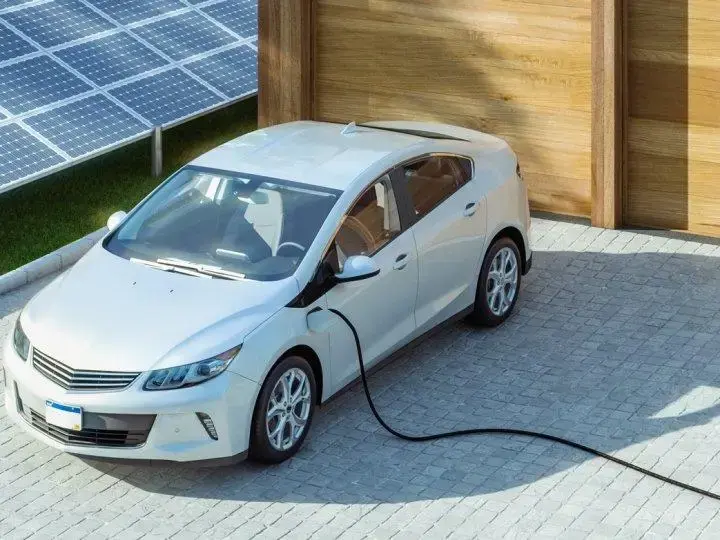
Home EV Charger Installation Benefit Chart
The following chart compares the practical benefits for common South Perth household situations:
Benefit | Standard Power Point | Dedicated EV Charger | Solar-Integrated Smart Charger |
Charging convenience | ██████ 6/10 | █████████ 9/10 | ██████████ 10/10 |
Charging control | ████ 4/10 | ████████ 8/10 | ██████████ 10/10 |
Solar integration | ██ 2/10 | ██████ 6/10 | ██████████ 10/10 |
Energy management | ███ 3/10 | ███████ 7/10 | █████████ 9/10 |
Future flexibility | █████ 5/10 | ████████ 8/10 | ██████████ 10/10 |
Illustrative comparison for education only. Actual performance depends on the vehicle, charger, electrical supply, solar system and installation.
Home EV Charging Across Western Australia
The South Perth experience is relevant to many other WA households, but regional properties can have additional considerations. Homeowners in Perth, North of Alkimos, South West WA, Broome, Djugan, Billingurr, Cable Beach, Derby, Kimberley and Roebuck may have different electrical infrastructure, property layouts and energy requirements.
For rural and regional properties, solar and battery storage can be particularly important parts of the broader energy conversation. EV charger planning should consider the available grid connection, existing renewable energy equipment and expected vehicle usage.
A commercial solar panel installer may also be appropriate for businesses, farms or larger properties that require a more substantial energy system. Residential installations should still be designed around the home's actual electrical demand rather than simply selecting the largest available equipment.
WA is also continuing to develop its distributed-energy framework. The state government currently lists rooftop solar, batteries, EV chargers and energy management systems as distributed energy resources and is consulting on changes designed to improve connection processes.
A Practical Installation Checklist

Is Home EV Charger Installation Worth It in South Perth?
For homeowners who regularly drive an EV, a dedicated charger can provide a strong combination of convenience, charging control and future flexibility. The benefits become even more compelling for households with rooftop solar or plans to install solar and battery storage. Rather than viewing an EV charger as another appliance, homeowners can treat it as part of an integrated home energy system.
For South Perth residents, the best approach is to assess the vehicle, electrical supply, parking arrangement, solar generation and future energy goals together.
A qualified electrician can then determine the appropriate charger, installation method and electrical requirements.
FAQs
1. Is a dedicated EV charger better than a normal power point?
Yes, for regular EV charging, a dedicated charger is generally more convenient and can provide faster charging than a standard power point. The WA Government recommends dedicated charging for homeowners seeking faster, easier charging and advises using a licensed electrician for new charging installations.
2. Can I charge my EV using solar panels?
Yes, compatible EV chargers can be integrated with residential solar systems. Depending on the equipment, charging can be scheduled or managed around solar generation. Your installer should assess your solar inverter, household consumption, charger and electrical supply before recommending a solar-charging configuration.
3. Do I need an electrician to install an EV charger?
Yes. The WA Government states that a new power point or dedicated home charger requires a licensed electrician. The electrician should check wiring capacity, charger location, electrical supply and safety requirements before completing the installation.
4. Can an EV charger work with a home battery?
It can, provided the charger and battery system are compatible and the overall electrical design supports the required loads. A professional installer can assess whether EV charging should use solar generation, battery energy, grid electricity or a combination based on the system configuration.
5. Are EV chargers suitable for apartment owners?
Yes, but apartment installations can require additional planning. Owners may need strata or owners' corporation approval, particularly if common property, shared parking or building electrical infrastructure is involved. The electrical capacity and connection method should be assessed before installation.
Final Thoughts
Home EV Charger Installation in South Perth can make electric vehicle ownership easier while creating an opportunity to connect transport with household energy. For homeowners, the strongest solution is often not simply choosing a powerful charger. It is choosing a charger that works with the property's electrical capacity, daily driving needs, solar system and future energy plans.
If you're considering solar panel installation, battery storage or an EV charger, planning these technologies together can create a more practical and future-ready home energy setup. For South Perth families, new home buyers, apartment owners and WA regional residents, professional assessment is the best starting point for a safe and suitable installation.


