.png)
Solar System Repairs Perth: Common Faults, Repairs & Smart Upgrades

Solar power systems are designed to operate for decades, but no solar installation is completely maintenance-free. Weather, ageing components, inverter failures, damaged wiring, and changing household energy needs can reduce system performance over time.
For homeowners and businesses across Perth, North of Alkimos, South West WA, Broome, Djugan, Billingurr, Cable Beach, Derby, Kimberley, and Roebuck, timely Solar System Repairs Perth services help restore production, extend equipment life, and maximise electricity savings. Whether your inverter displays an error, your energy bills have increased unexpectedly, or you're planning to add battery storage, professional repairs and upgrades keep your investment performing at its best.
Why Solar Systems Need Repairs Over Time
Even premium solar systems experience wear after years of exposure to Australia's harsh climate.
Common causes include:
Extreme summer temperatures
Coastal salt corrosion
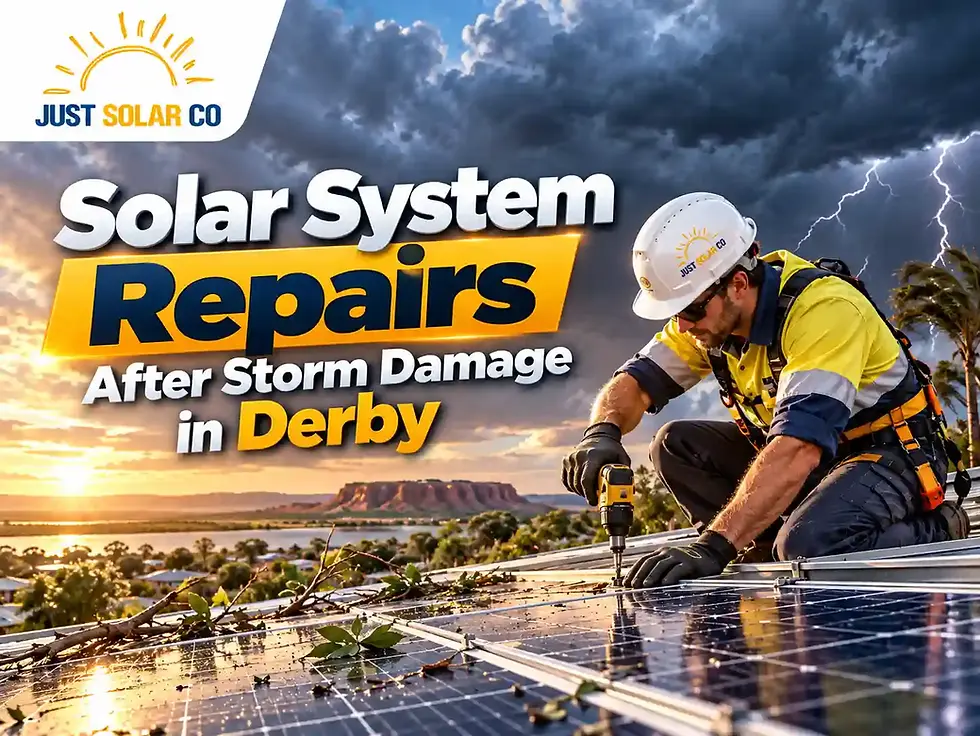
Storm damage
Heavy rainfall
Loose electrical connections
Wildlife damage
Ageing inverters
Dirty solar panels
Software communication issues
Ignoring these problems often leads to lower electricity production and higher power bills.

Most Common Solar System Faults in Western Australia
Different faults affect systems differently. Some reduce performance gradually, while others stop energy production entirely.
Solar Fault | Common Cause | Typical Impact | Recommended Solution |
Inverter Error | Internal electronics failure | Low or zero generation | Repair or replacement |
Damaged Solar Panel | Hail, falling branches, impact | Reduced output | Replace affected panel |
Loose Wiring | Heat expansion or poor installation | Safety risk | Electrical inspection |
Hot Spots | Faulty cells | Lower efficiency | Panel replacement |
Isolation Switch Failure | Weather exposure | System shutdown | Switch replacement |
Monitoring Failure | Wi-Fi or communication issue | Unable to monitor production | System reset |
Professional diagnostics identify the actual issue before unnecessary components are replaced.
Signs Your Solar System Needs Professional Repairs

Solar Repairs vs Solar Upgrades
Not every ageing system needs replacing. Some systems only require repairs, while others benefit more from upgrades.
Situation | Repair | Upgrade |
Broken inverter | ✔ | Optional |
One damaged panel | ✔ | No |
15-year-old system | Limited | ✔ |
High electricity usage | No | ✔ |
Adding EV charger | No | ✔ |
Battery installation | No | ✔ |
Expanding roof system | No | ✔ |
A professional assessment helps determine the most cost-effective option.
Typical Solar Repair Process
Customer Reports Issue
          │
          ▼
Visual Inspection
          │
          ▼
Electrical Testing
          │
          ▼
Fault Diagnosis
          │
          ▼
Repair or Replace Components
          │
          ▼
Performance Testing
          │
          ▼
Monitoring Verification
          │
          ▼
System Back to Full Operation
This structured process ensures faults are resolved safely while meeting Australian electrical standards.
Upgrading an Older Solar System
Technology has improved significantly over the past decade. Many Western Australian homeowners installed systems between 2010 and 2016. Those systems often produce less electricity than modern alternatives. Larger Solar Arrays Adding extra panels increases daytime production. High-Efficiency Solar Panels. Modern panels generate more electricity using the same roof space.
Battery Storage
Store excess daytime energy for night-time use.
Benefits include:
Lower electricity bills
Reduced grid dependence
Backup power (selected systems)
Better return on solar investment
Smart Monitoring
Real-time monitoring helps identify faults before they become expensive repairs.
Modern Inverters
New-generation hybrid inverters improve efficiency while supporting battery storage.
Why Professional Solar Repairs Matter
Solar systems contain high-voltage electrical equipment.
DIY repairs can:
Void warranties
Create electrical hazards
Cause roof damage
Reduce insurance coverage
Lead to expensive future failures
Qualified technicians have specialised equipment to safely diagnose:
DC voltage issues
Insulation faults
Earthing problems
Thermal hotspots
Inverter communication errors
Professional repairs also maintain compliance with Australian Standards.
Regional Challenges Across Western Australia

Insight: Delaying Repairs Often Costs More
Many homeowners postpone repairs because the system still appears operational.
However, a small inverter fault or damaged panel can reduce annual electricity production significantly. Lower generation increases grid electricity purchases, reducing overall savings. Early diagnosis often prevents additional component failures and keeps repair costs lower than waiting for complete system failure.
Choosing the Right Solar Service Provider
Before booking repairs, consider several important factors.
Look for companies that offer:
Licensed electrical technicians
Experience repairing multiple inverter brands
Battery integration expertise
Commercial and residential experience
System performance testing
Warranty support
Genuine replacement components
Ongoing maintenance plans
Whether you're a homeowner or looking for a commercial solar panel installer, selecting experienced solar panel installers helps protect your investment. If you're planning a new solar panel installation, choosing a provider that also offers repair and upgrade services provides long-term support throughout the system's lifespan.
Repair or Replace? Making the Right Decision
Several factors influence whether repairing or replacing equipment is the smarter investment.
Consider:
System age
Repair cost
Panel efficiency
Electricity consumption
Roof condition
Future battery plans
Many households installing an electric vehicle or increasing home energy use find upgrading provides greater long-term savings than repeatedly repairing older equipment. Modern Solar Panel for Western Australian homes are also designed to integrate seamlessly with battery storage and smart energy management systems.
Final Thoughts
A solar power system should continue producing reliable electricity for decades with proper maintenance. Addressing faults early helps prevent costly failures, improves energy production, and extends equipment life. Whether your system requires inverter repairs, damaged panel replacement, monitoring upgrades, or battery integration, professional Solar System Repairs Perth services help homeowners and businesses maximise their investment.
Across Perth, North of Alkimos, South West WA, Broome, Djugan, Billingurr, Cable Beach, Derby, Kimberley, and Roebuck, timely repairs and carefully planned upgrades keep solar systems operating safely, efficiently, and ready to meet future energy needs.
FAQs
1. How do I know if my solar system needs repairs?
Common signs include lower electricity production, higher power bills, inverter error messages, damaged panels, unusual system shutdowns, or monitoring alerts. A licensed technician can perform diagnostic testing to identify the exact cause and recommend the most suitable repair before performance declines further.
2. How much do solar system repairs cost in Perth?
Repair costs depend on the fault. Minor issues such as replacing isolation switches or reconnecting wiring generally cost less than inverter or panel replacements. A professional inspection provides an accurate quotation after identifying the specific components requiring repair.
3. Is it worth upgrading an older solar system instead of repairing it?
Systems older than 10–15 years may benefit from upgrades if household electricity usage has increased. Adding efficient panels, replacing ageing inverters, or installing battery storage often delivers better long-term savings than repeatedly repairing outdated equipment.
4. Can damaged solar panels still produce electricity?
Yes. Many damaged panels continue generating electricity but usually at reduced efficiency. Cracks, hot spots, moisture ingress, or internal cell damage can gradually worsen, making prompt inspection and replacement important for maintaining safe and reliable system performance.
5. How often should a solar system be inspected?
Most professionals recommend a comprehensive inspection every two to three years, with additional checks after severe storms, hail, or unusually high temperatures. Regular maintenance helps identify small faults before they become expensive repairs and keeps the system operating efficiently.